
G8JNJ
About
- Username
- G8JNJ
- Joined
- Visits
- 4,661
- Last Active
- Roles
- Member
- Points
- 130
Reactions
-
Persistent suspicious connection
I have noticed a problem, where folks stay connected or a long period, but they are only viewing the waterfall or spectrum display, and maybe doing something else.
So the frequency and mode they have selected, are sometimes misleading with regard to the purpose the KiWi is being used for.
This is usually indicated by being fully zoomed out e.g. z0
Regards,
Martin

-
Uncommanded 26 dB attenuation, SMA connector tightening
I wouldn't trust a Chinese made torque wrench.
It's unlikely that the KiWi will be repeatedly connected and disconnected as much as some other equipment.
Slightly past hand tight is fine, and don't use a big adjustable wrench.
Regards,
Martin

-
Please protect your KiwiSDR 2 from the high-level RF fields of nearby transmitters
Wow, what sort of power level must have been present at the KiWi input to do that ?
Even with relatively close spaced antennas, the coupling between them isn't usually that great.
Most receivers will withstand RF levels up to about +10dBm, and I would expect the KiWi to be similar.
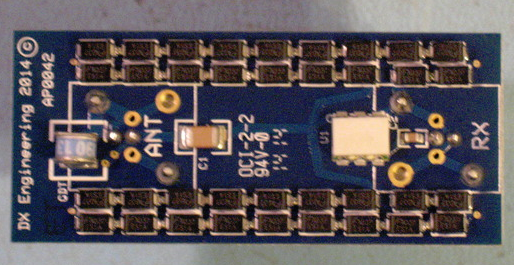
There was recently a bit of discussion about receiver protectors on my websdr IO group.
This was a simple design I've previously used with other receivers.
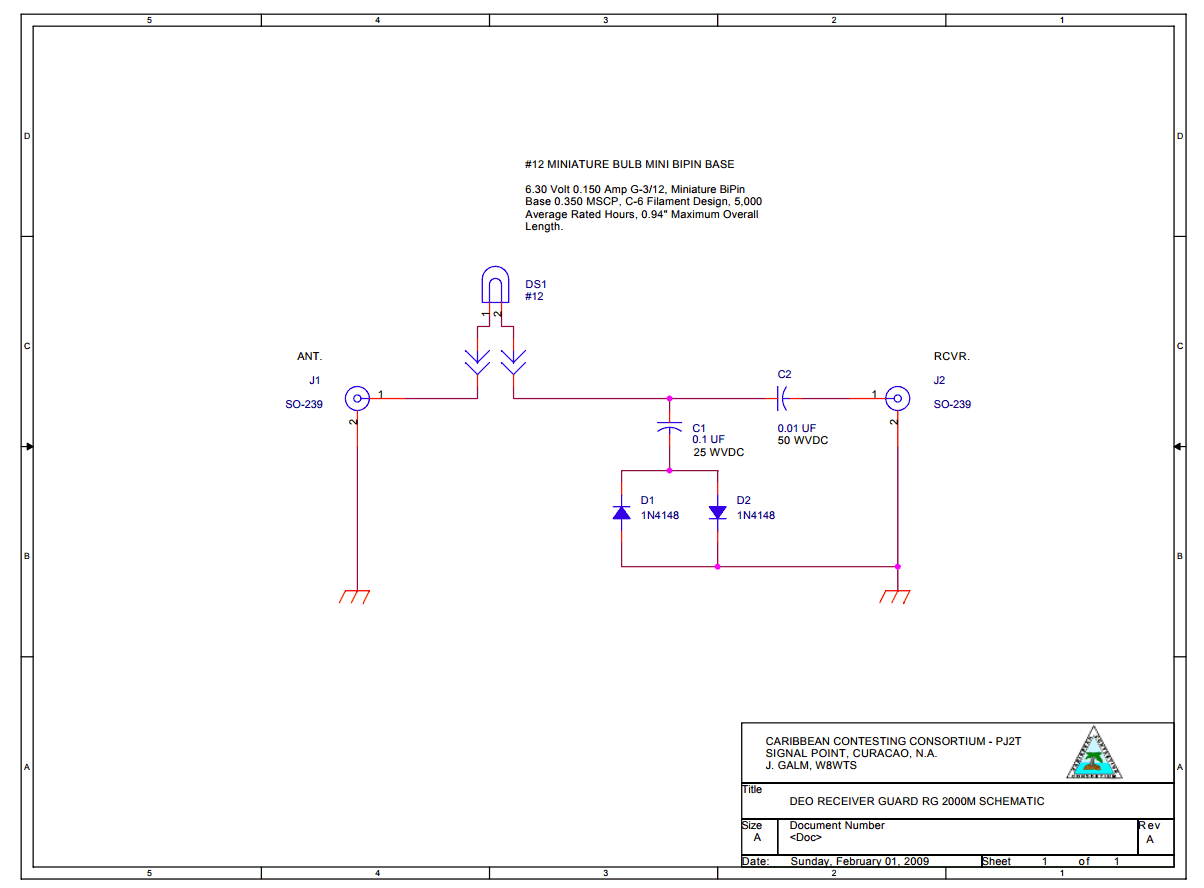
The low wattage 'pea' bulb goes progressively higher resistance as it heats up. This is a graph I plotted of a couple of bulbs I tested.
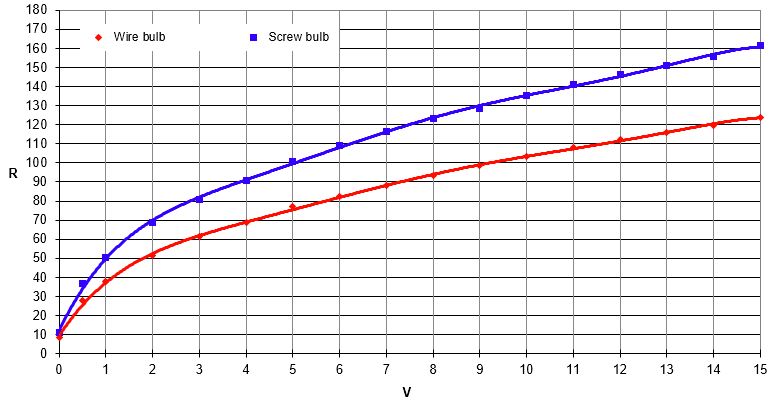
The KiWi can be set to auto-mute at excessive signal levels, and this combined with an RF limiter provides a useful TX/RX switch.
If you look on-line you should be able to find various circuits of commercial receive protectors. Most of which consist of a mini-circuits transformer which saturates to provide soft limiting, followed by a pair of diodes to provide hard limiting.
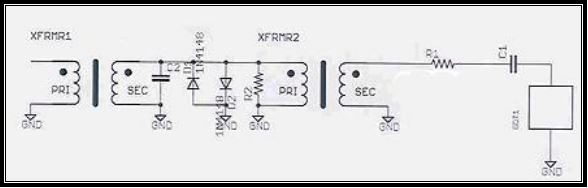
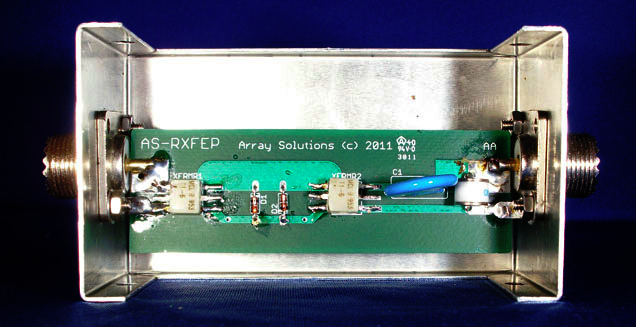
And another type using a similar principle.
Regards,
Martin

-
Opinions needed: Ham radio digital modes -- what's currently being used?
Hi John,
I think you have most of the common modes already covered, perhaps with the exception of ROS.
I agree about the lack of RSID. It is becoming increasingly difficult to identify some digital modes that are being used on the amateur bands. New ones seem to po up all of the time, and unless you are part of the "clique" that use them, up to date information regarding operational frequencies and specific modes, seems to be very hard to find.
Outside of the amateur bands
Winlink and Sailmail seem to be the only others that spring to mind and they use a mixture of Packet, Pactor, ARDOP and VARA, most of which is proprietary
https://www.winlink.org/RMSChannels
Regards,
Martin

-
Map pins meaning
Hi Glenn,
I have used WSPR Daemon with good results, but unless you have set aside some KiWi channels to allow it to run, it's not really applicable to the average KiWi installation.
Although not calibrated against a known noise reference, the graphs I have obtained using the standard KiWi SNR stats are almost as detailed as the ones I obtained using KiWi Daemon, in therms of indicating propagation changes. But unlike WSPR Daemon, it's a background process and doesn't require additional resources such as a RasPi (scarce at the moment), or consume precicous receive channels in order to work.
In addition I feel that the use of WSPR is beginning to wane somewhat, and FT8 is now taking over the world of Amateur radio. In fact if FT8 had a mechanism for reporting transmitted power and a full 6 digit locator, as does WSPR, I think WSPR would be in further decline for use as a propagation indicator.
With this in mind, it would be nice if the KiWi could support more of the JT/FT modes as an extension, in addition to WSPR, as I believe the libraries are available, but I guess it's not particularly high on the adgenda for John these days.
Regards,
Martin